

Creating dance
Filter Entries:
Articles View all
Fusion of Australian contemporary dance and Mobius Kiryuho
This paper discusses the exploration of cultural diversity and the creation of common ground and understanding through choreographic practice in a cross-cultural, international collaboration between Mirramu Dance Company (Australia) and Kyoko Sato from the Mobius Kiryuho Institute (Japan). The paper explores the differences and the similarities discovered in each of our culturally specific movement practices, during the creative process of a dance production, Silk, and discusses how these discoveries influenced the choreographic content of the performance.
Shirley McKechnie AO – choreography
Shirley McKechnie AO was an early choreographer of Australian contemporary works, largely influenced by her Bodenwieser training alongside greats such as Johanna Kolm (later Exiner), Margaret Lasica and Daisy Purnitzer, and where improvisation and choreography were central.
Dancing into belonging: towards co-presence in place
The paper advocates for the possibilities of dance in community development and place-making contexts through its proposition of a ‘phenomenology of belonging’. From her vantage as facilitator/director of video series Dancing Place, the author observes sensory interactions between participants’ bodies and the sites in which they performed, as enhancing relationality between participants and place.
Conceived as part of an ARC Discovery Project exploring potentials of artistic methods to challenge neighbourhood-based stigma, led by sociologist Deborah Warr, and employing the expertise of screendance artist Dianne Reid to create the video works, Dancing Place invited diverse residents of Wyndham, Victoria, to dance to their favourite music in their favourite local sites. Through reflection upon the project, the author teases out issues of visibility, embodiment, identity, marginalisation and changing relationships to place.
The participants of varied cultural and social backgrounds, age, gender and levels of dance training, inevitably chose to dance in very different styles and places. The paper explores some political and social ramifications of (being represented via video) dancing in relation to place for particular groups and individuals, and outlines the facilitating artist’s motivations for the project’s structural framework. Rather than presuming or contriving a unified ‘community’, the nine distinctively discrete videos were presented side by side, which collectively evoked a sense of co-presence, or parallel belonging.
The negotiations of relationship—a conversation about dance improvisation
This paper is a conversation about building depth in our relationships with our bodies and our meeting points with each other. Framed within the context of an improvisational dance practice, the authors, Dianne Reid and Melinda Smith, reflect upon their long-term shared dance practice, their evolving performance work, Dance Interrogations, and the cultural shifts possible as a result of long-term artistic practice. Their unique, long-standing collaboration (over six years and continuing) is unique in Australia and internationally. It is a collaboration which challenges deeply held beliefs around the low expectations of people who have a disability and explores the choreographic potential in the body and artist who experiences Cerebral Palsy—a condition affecting the muscular and skeletal system and which can make voluntary movement such as that in dance, difficult. Their practice itself constantly shifts between artistic formats in both studio and performance contexts, and draws upon a range of technologies familiar within the cultures of screendance and disability. This account is improvisational, an undoing of structure, to encourage other angles and depths of perception.
Dancing participation: Observations of a long-term group dance improvisation practice
This article discusses participation in a group dance improvisation practice over time. Described, is a regular dance practice and how it is the dancing over time itself that is the situation in which something is ‘going on’. Participating or acting in this practice allows ways of thinking, understanding, experiencing, knowing that exist only while or at least because of the participation in this dancing. The term ‘action’ as suggested by Hannah Arendt in her book The Human Condition, is used as a concept with which to think through the dancers’ experience in a shared practice. Other ideas including Claire Bishop’s participatory art and Tim Ingold’s discussion of ‘drawing together’ are explored to define participating in dancing in a studio practice, and to articulate what is happening and how that participation can be observed.
Projects View all
Ausdance Peggy van Praagh Choreographic Fellowship
A biennial fellowship of $5,000 – $10,000 awarded to a mid-career choreographer.
Keith Bain Choreographic Travel Fellowship
The biennial Keith Bain Choreographic Travel Fellowship supports international travel and experiences by emerging choreographers (under 40 years) across any dance genre.
Creating Pathways National Indigenous Dance Forum
Creating Pathways was a national Indigenous dance forum for mid-career dance artists held in October 2005 at the National Museum of Australia in Canberra. Participants came from all over Australia to discuss issues such as identity, training, the question of contemporary Indigenous dance, career opportunities and professional practice.
As a result of recommendations made at Creating Pathways, a new position of National Indigenous Dance Coordinator was funded by the Australia Council.
Creating Pathways was managed by Ausdance National and funded by the Aboriginal and Torres Strait Islander Arts Board and the Dance Board of the Australia Council, and the Arts ministries of NSW, Queensland, Western Australia, South Australia and the Northern Territory.
Australian Youth Dance Festival
The Australian Youth Dance Festival provides creative development opportunities for young people at all skills levels. They work with some of the finest and most exciting dance makers in Australia. The experience provides professional dance artists with creative challenges, professional development and opportunities to work alongside their peers and with Australia's rising youth dance talent. Participants include school students, youth dance company members, full-time dance students and relative beginners in dance, as well as dance teachers, choreographers and youth dance leaders.
2012 National Dance Research Forum
In 2012, Ausdance National, with the Tertiary Dance Council of Australia (TDCA), hosted a forum for dance researchers at Deakin University and Victorian College of the Arts in Melbourne.
Publications View all
Australian guidelines for teaching dance
The Australian guidelines for teaching dance outlines codes of ethical and professional behaviour and emphasises the importance of safe dance practice and teaching methodology.
We designed it to help dance teachers and students by providing minimum standards, and by suggesting ways teachers can maintain or upgrade their teaching skills. Parents can use the Guidelines to help choose a dancing school or group for their children.
Panpapanpalya 2018
This publication of 16 papers with authors from 9 countries provides a snapshot representation of themes from the joint dance congress broadly embracing dance, gathering, generations, learning. The papers range from the beginnings of dance in the early years through the different stages of school and to further education – and beyond through the lifespan to the joys and challenges of dancing in later years with lived experiences that bring changing bodies, new insights and wisdom.
Asia–Pacific Channels
Asia–Pacific Channels is the bi-annual newsletter of the World Dance Alliance (WDA), published by Ausdance National in collaboration with MyDance Alliance in Malaysia. It profiles dance events and activities from WDA members throughout the Asia–Pacific region.
Brolga 41
In Australia, the social and aesthetic contexts of ‘live’ contemporary dance (practice and performance), and the networks these contexts facilitate, remain diverse even if they are sometimes fragile or unexpected. This issue of Brolga—an Australian journal about dance aims to give some visibility or clarity to a select few of these diverse practices, primarily as they have been understood by the dance practitioners themselves. Networks create links between things. The variable ways such connections are created, valued and understood are outlined in this issue in a series of physical engagements which articulate acts of opening or becoming, acts of social activation, acts engendering community identity, or acts of private interpersonal collaboration.
Exploring identities in dance
Proceedings from the 13th World Congress of Dance and the Child International—exploring the theme of identity in dance as it is experienced in formal, non-formal and informal settings of education.
Dance is part of four recognised artistic areas within arts education, which is acknowledged as a key area within UNESCO’s 21st Century Skills. Dance education in particular puts an emphasis on the role of the body in artistic processes, and the body is in current research in educational studies, psychology and neurophysiology highlighted as being the ‘place’ where experiences, cognition and identity processes are grounded. A person’s identity is multi-faceted and believed to be constantly developing in intertwinement with embodied and cultural experiences, social relations and the various situations that the human being experiences.
News / Blog / Press Releases / Events View all
International Young Choreographers Project 2024
Applications from emerging Australian choreographers are now being called for this international opportunity.
The IYCP has been providing young choreographers with this invaluable artistic and cultural experience since 1999. Read about previous Australian participants’ experience here.
Closing date is 16 December 2023.
About the International Young Choreographer Project
The International Young Choreographer Project (IYCP) is held in southern Taiwan in July/August and is hosted by World Dance Alliance Asia–Pacific Taiwan chapter. Eight choreographers from the Asia-Pacific region are chosen by WDA Asia Pacific (WDAAP) to attend.
Participants are selected from a list of young choreographers recommended by World Dance Alliance country chapters (Asia Pacific, including Australia, the Americas and Europe), based not only on their choreographic work, but also on their ability to meet the challenges of working in a foreign country with unfamiliar dancers and culture, and their potential as a significant contributor to dance in the future.
The selected choreographers work with selected dancers from Taiwan. The three-week process of developing new works with local Taiwanese dancers concludes with two performances. The program highlights the diversity of dance in both styles and cultures, and how local and international choreographers perceive their daily lives and the world.
Participants must fund their own travel to Taiwan. However, an honorarium of US$800 for WDAAP choreographers is included, plus accommodation, local transportation, dancers, studios, publicity, production and office assistance.
Australian applicants must be members of Ausdance (find your local Ausdance).
Information for applicants
Application forms are available from Ausdance National.
In addition to contact information, applicants will be asked to answer these questions:
- What you would gain from a professional experience such as this?
- Why would you like to work in Asia?
- A brief concept of your proposed work.
- A 200-word biography and a resume/CV.
Closing date is December 16 2023.
Congratulations to the shortlisted nominees of the 21st Australian Dance Awards
Celebrating 21 years, the Australian Dance Awards is one of the country’s most prestigious performing arts awards. The Awards acknowledge people working in the professional dance sector who have made innovative and exceptional work of national significance, or have made an outstanding and enduring contribution to the dance industry.
‘Arriving at the shortlist is a demanding job for the volunteer panel of 13 dance sector professionals representing all states and territories’, said Julie Dyson, nominations coordinator for the 2018 Australian Dance Awards.
‘Panel members include educators, independent artists, dance company directors, and writers/reviewers. We receive between 450 and 700 nominations each year. A thorough voting system is in place, with two, sometimes three rounds of voting.’
Presented by Ausdance National, the 2018 awards will take place on Saturday 8 September at the Brisbane Powerhouse, with tickets on sale from 9 July.
‘Ausdance National is honoured to present the 21st Australian Dance Awards in partnership with industry sponsors’, said Kerry Comerford, Executive Director of Ausdance National. ‘The Awards ceremony is the time we acknowledge and celebrate the dance profession’s depth and diversity, both on and off the stage.’
Presented in an afternoon of performances showcasing some of Australia’s best dance of the past year, the annual Australian Dance Awards rely on the generosity and goodwill of the dance sector. ‘It’s important that the event represents the excellence and diversity of dance in Australia’ said Sandi Woo, 2018 Award’s producer.
2018 Australian Dance Awards shortlist
Services to Dance
- Philippe Charluet
- Marilyn Miller
- Philip Piggin
- Hilary Trotter
Services to Dance Education
- Paige Gordon
- Raewyn Hill
- Sinsa Mansell
- Katrina Rank
Outstanding Achievement in Community Dance
- Annette Carmichael (choreography), James Gentle (sound design) for The Beauty Index
- Tracks Dance for Man Made
- QPAC, The Royal Ballet and Community Groups for We All Dance
- Sprung!! Integrated Dance Theatre for Share House
Outstanding Achievement in Youth Dance
- Austinmer Dance Theatre for UNREAL
- Co3 for Project next
- QL2 Dance for This Poisoned Sea
- Moorambilla Voices for Gundabooka
Outstanding Performance by a Company
- Co3 for The Zone
- Dancenorth Attractor
- STRUT Dance for William Forsythe's One Flat Thing, Reproduced
- Queensland Ballet for Raw (triple bill): No Man’s Land, Glass Concerto and Ghost Dances
Outstanding Achievement in Choreography
- Lucy Guerin and Gideon Obarzanek for Attractor (Dancenorth and Lucy Guerin Inc)
- Raewyn Hill for The Zone (Co3)
- Stephanie Lake for Pile of Bones (Stephanie Lake Company)
- Stephen Page for Bennelong (2017) (Bangarra Dance Theatre)
Outstanding Achievement in Independent Dance
- Martin del Amo for CHAMPIONS
- Australian Dance Artists for Restraint(s)
- Michelle Heaven for In Plan
- Nick Power (choreography), Jack Prest (sound design) for Between Tiny Cities រវាងទីក្រុងតូច
Outstanding Performance by a Female Dancer
- Jana Castillo for construct (Australian Dance Theatre)
- Amber Haines for Spectra (Dancenorth)
- Ako Kondo for Alice’s Adventures in Wonderland (The Australian Ballet)
- Charmene Yap for Ocho (Sydney Dance Company)
Outstanding Performance by a Male Dancer
- Richard Causer for Behind Closed Doors (Expressions Dance Company)
- Nelson Earl for Ocho (Sydney Dance Company)
- Beau Dean Riley Smith for Bennelong (2017) (Bangarra Dance Theatre)
- Kimball Wong for construct (Australian Dance Theatre)
Outstanding Achievement in Commercial Dance, Musicals or Physical Theatre
- Gravity & Other Myths for BACKBONE
- Michael Ralph for SELF
- Andrew Hallsworth for Muriel’s Wedding (Sydney Theatre Company and Global Creatures)
- Nicola Gunn and Jo Lloyd for Piece for Person and Ghetto Blaster
Outstanding Achievement in Dance on Film or New Media
- Richard James Allen for Enchant
- Sophia Bender for Behind Barres
- Sue Healey for Eileen
- Catherine Moore & Jade Lowry for Unstilled
2018 Australian Dance Awards shortlist media release (50 KB PDF)
Dance in Proximity: World Dance Alliance Asia Pacific Conference & AGM
Taipei National University of the Arts, 10–11 November 2017
There were some special moments at the Dance in Proximity conference, hosted in Taiwan by the Taipei National University of the Arts in November, and organised by a wonderful team of artists, choreographers and teachers, led by Yunyu Wang.
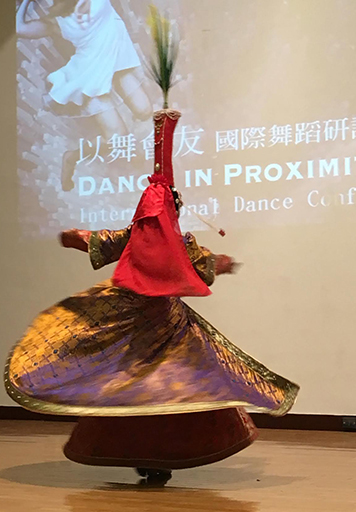 Munguntsetseg Munkhbadrakh demonstrating traditional Mongolian dance movements during the Cross-cultural Dance Education session. Photo Julie Dyson
Call for papers—The Oxford Handbook of Contemporary Ballet
Edited Volume: The Oxford Handbook of Contemporary Ballet
Editors: Dr Kathrina Farrugia-Kriel (Faculty of Education, RAD) and Dr Jill Nunes Jensen (Loyola Marymount University)
We are seeking contributions to an edited volume on contemporary ballet. The book will posit ‘Contemporary Ballet’ as a new domain within the broader frameworks presently recognised by discourses in dance.
Kristina Chan receives the Peggy van Praagh Choreographic Fellowship
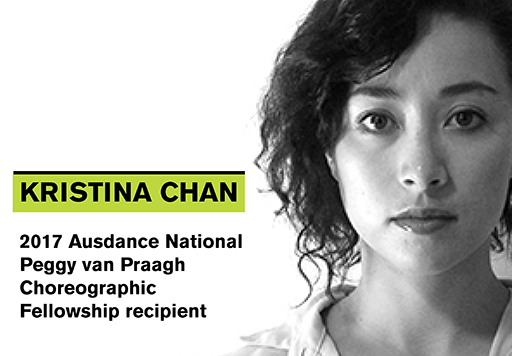
Congratulations to Kristina Chan who received the Ausdance National Peggy van Praagh Choreographic Fellowship at the 2017 Australian Dance Awards on Sunday 24 September 2017.